National Security Policy Center Internship Program
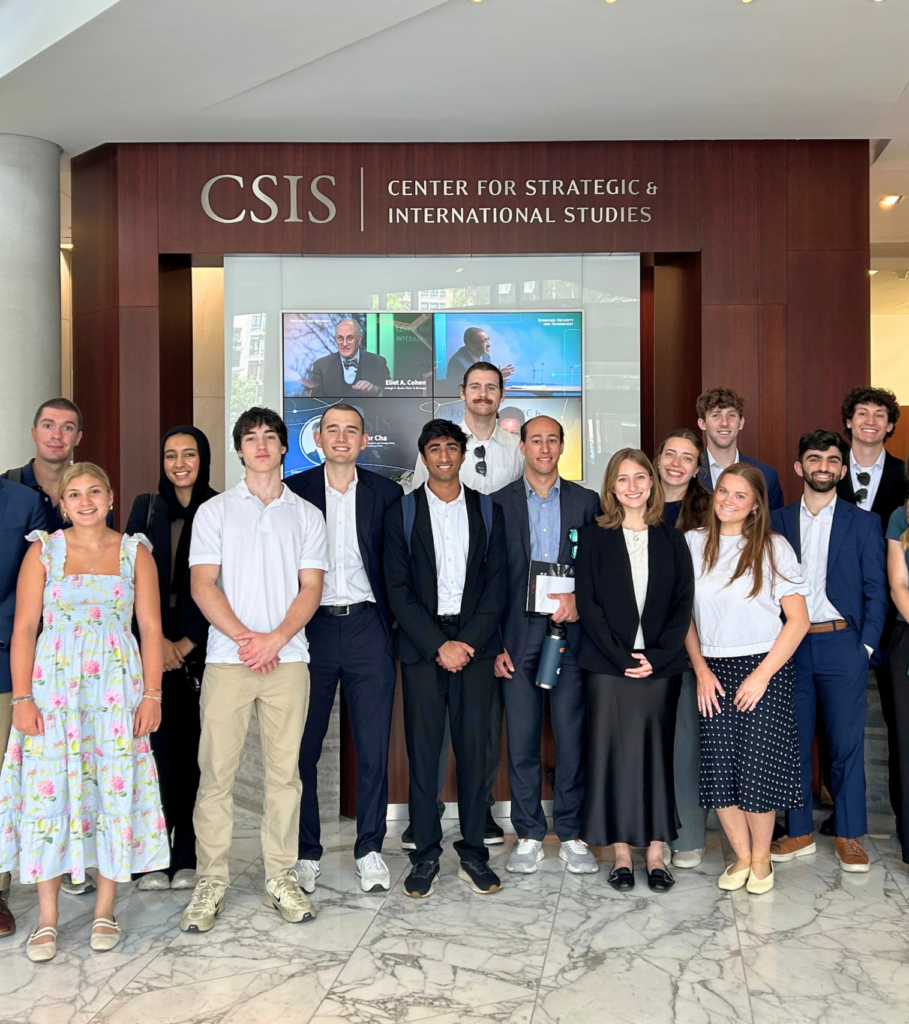
2026 National Security Policy Center interns visiting the Center for Strategic & International Studies in Washington, D.C.
The National Security Policy Center (NSPC) offers a variety of summer internship opportunities to students with an interest in national security. Applications for the NSPC’s 2026 Summer Internship programs are now closed. Applications for summer 2027 will open in February.
To receive information on future internship opportunities, sign up for NSPC news and updates.
Internship Opportunities
Internship opportunities through the NSPC vary slightly year by year. The Center hosts summer internships in Charlottesville for up to 10 undergraduate and graduate students each summer for either 8-week or 10-week sessions. The NSPC has also offered off-site opportunities in partnership with outside organizations, including:
Why Participate in a National Security Internship at UVA?
Our undergraduate researchers and interns come from across the University to address difficult national security challenges. They develop strong research and presentation skills, while supporting a wide range of government and academic sponsored research. Along the way, our interns gain an understanding of the complexities of national security policymaking; establish positive relationships and build new networks; and receive professional advice and mentorship from NSPC leadership.
Who’s Eligible to Apply for a National Security Policy Center Internship?
All undergraduate students, regardless of major, are eligible to apply for our internship program.
Support for the National Security Policy Center’s Internship Program
The National Security Policy Center’s 2026 Summer Internship was made possible through the support of Washington Harbour.
Interested in lending your support as a NSPC partner? Visit our support page to learn more about different ways to contribute to NSPC research, internships, programming, and more.
National Security Policy Center 2026 Summer Internship
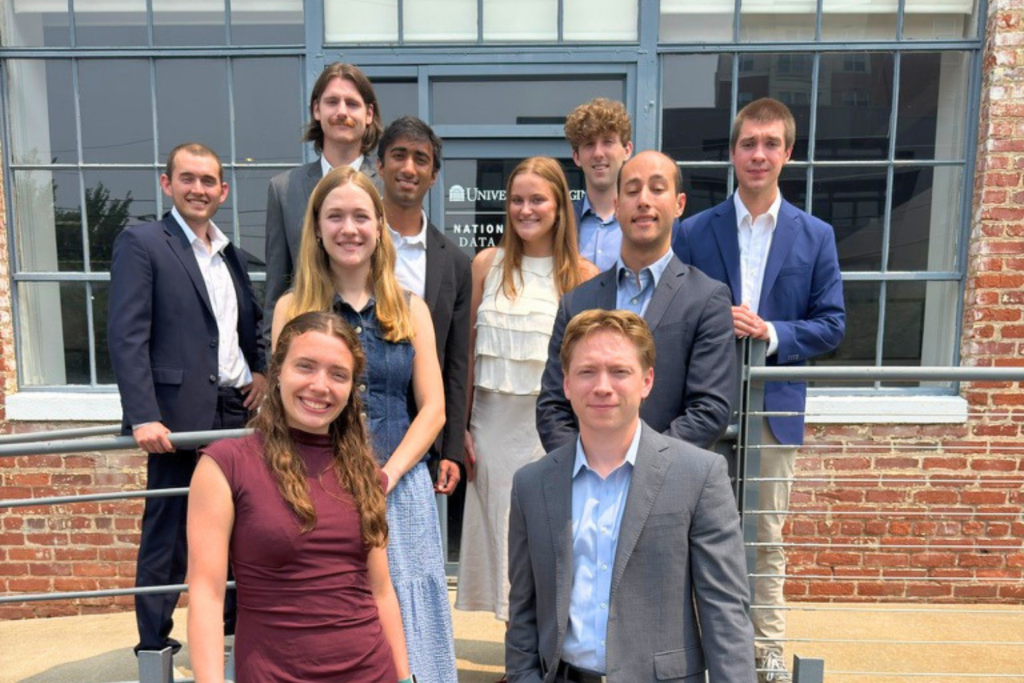
The National Security Policy Center’s (NSPC) 2026 summer interns dedicated two months to conducting research on behalf of the University of Virginia’s National Security Data and Policy Institute (NSDPI). Sponsored by Washington Harbour, the program drew nine undergraduate and graduate students from across the University of Virginia to work on questions ranging from undersea competition in the Pacific to the security of the American food supply.
The internship followed the two-part structure that has come to define the NSPC’s summer program. In the first half, the cohort split into two teams, each producing a literature review for the NSDPI; in the second, each intern researched and wrote an individual policy white paper on a national security topic approved by NSDPI supervisors. Between these main efforts, interns also had opportunities to assist with research for Sea Power, a NSPC initiative dedicated to the future of sea power and U.S. naval policy.
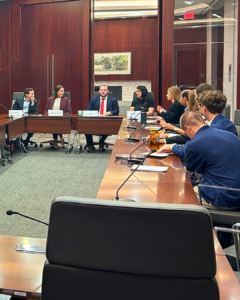 Professional development was also a key component of the NSPC summer internship experience. At the Center for Strategic and Budgetary Assessments in Washington, D.C., a panel that included Senior Fellow Dr. Travis Sharp walked interns through how think tanks operate and the functions they serve within the broader U.S. defense and national security apparatus. At the Center for Strategic and International Studies, they met junior staffers from the Australia Chair, Middle East, and Europe, Russia, and Eurasia programs, who described the Center’s globally minded work. Back in Charlottesville, several external speakers offered their time and expertise to the internship cohort as well. A current member of the Foreign Service, a retired panel of senior intelligence officers, current policy experts on the Ukraine and Russia conflict, and experts from the defense intelligence sector all spoke to the group throughout the summer.
The NSPC also sponsored a separate group of seven students in external internships this summer: three at CSIS (Anna Douglas Piper, Hovsep Seferian, and Santana King), two at CSBA (Ryan Faddis and Imane Akhanous), one at the Center for a New American Security (Celeste Wetmore), and one at Impact Greene in Greene County, Virginia (Ali Asfour). Their placements spanned European security, defense budgeting, Middle East policy, and community development, giving each a different vantage point on the national security profession.
The cohort’s published research products, including its literature reviews, white papers, backgrounder memos, and slide decks, are available on the NSPC’s research page.
Receive NSPC News & Updates
Click below to join our email list so you can receive news, updates, event notices, and more from UVA’s National Security Initiatives.