Natural Objects and Environmental Processes as Defense Infrastructure
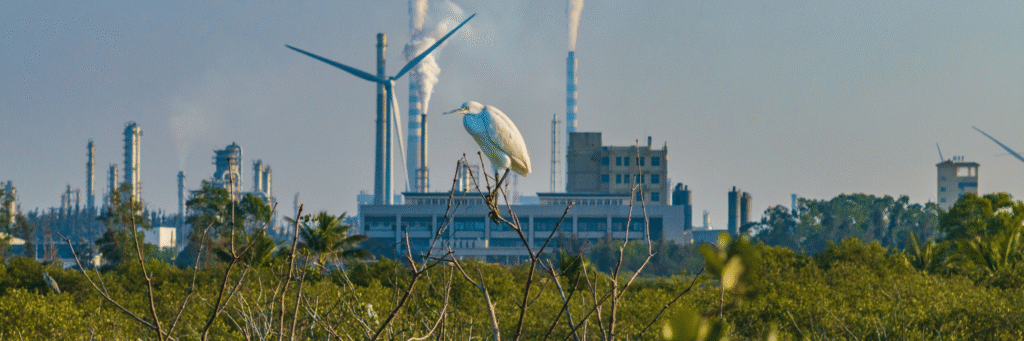
The Department of War (DOW) manages roughly 5,000 military installations with a global real estate portfolio valued at over $1 trillion. As of 2023, one-third of the DOW’s military installations worldwide are located in coastal areas and have experienced, or are at risk of, sea-level rise and extreme weather events. It is estimated that climate change and extreme weather have cost the DOW $15 billion over the past decade.
The People’s Republic of China (PRC) is facing similar issues. Due to China’s topography, roughly 44% of the nation’s population and 61% of its GDP come from coastal regions. Many of these areas are projected to experience a sea-level rise of 55 to 170 mm over the next 30 years.
Facing these extreme risks, China’s military and government institutions have taken deliberate action to prepare for extreme weather and protect infrastructure from further environmental degradation. Despite their adversarial relationship, the US can learn from these PRC efforts. A new literature review from the National Security Policy Center aims to do just that.
Working for UVA’s National Security Data and Policy Institute as part of the National Security Policy Center’s 2026 Summer Internship, a team of UVA students synthesized the literature on natural objects and environmental processes as defense infrastructure. Expanding upon an initial backgrounder memorandum, their full literature review begins with an examination of historical and contemporary case studies that demonstrate how states and non-state actors have leveraged waterways, terrain, forests, and coastal environments to advance military and security objectives. It goes on to examine how these patterns are reflected in Chinese policy, considering both historical and contemporary approaches to environmental management, infrastructure development, and national security in the People’s Republic of China. The review concludes with six key takeaways for U.S. policymakers grappling with the impact of environmental degradation on military installations.
Research Products
Backgrounder Memorandum
MEMORANDUM FOR NSDPI RESEARCHERSON NATURAL OBJECTS AND PROCESSES AS DEFENSE INFRASTRUCTURE
Literature Review
Natural Objects and Environmental Processes as Defense
Presentation Slide Deck
Natural Objects and Environmental Processes as Defense Infrastructure
Student Researchers

Brooke Livergood
Brooke is a 2026 MPP Summer Intern and has previously worked with the NSPC on various projects. Her areas of interest include national security, emerging technologies, defense, and international relations. After graduating in May with a degree in Foreign Affairs and minor in data science, Brooke will continue her studies at UVA as an Accelerated Master of Public Policy student at the Batten School.
 Jane McGuiggin
Jane McGuiggin is a NSPC 2026 summer intern. A third-year student from Boston Massachusetts studying foreign affairs, Jane’s interests include counterterrorism, national security, and nuclear politics with a special interest in the Middle East. She hopes to pursue a career in national security or public service.
 Maeve Myers
Maeve Myers is a rising fourth year from Louisa County, Virginia studying Public Policy with a minor in Psychology. She is interning at the National Security Data and Policy Institute (NSDPI) for the summer of 2026. In her free time, Maeve enjoys running, spending time outdoors and catching up with friends.
 Peter Sullivan
Peter Sullivan is a 2026 summer intern from Stafford, Virginia. He will graduate in May of 2026 with a double major in Government and Economics and is currently pursuing a Master of Public Policy. Peter’s areas of interest include U.S. force posture, gray zone conflict, and economic statecraft. Upon graduation, he plans to pursue a career in the United States Foreign Service or the intelligence community.
Receive NSPC News & Updates
Click below to join our email list so you can receive news, updates, event notices, and more from UVA’s National Security Initiatives.