UVA Sea Power
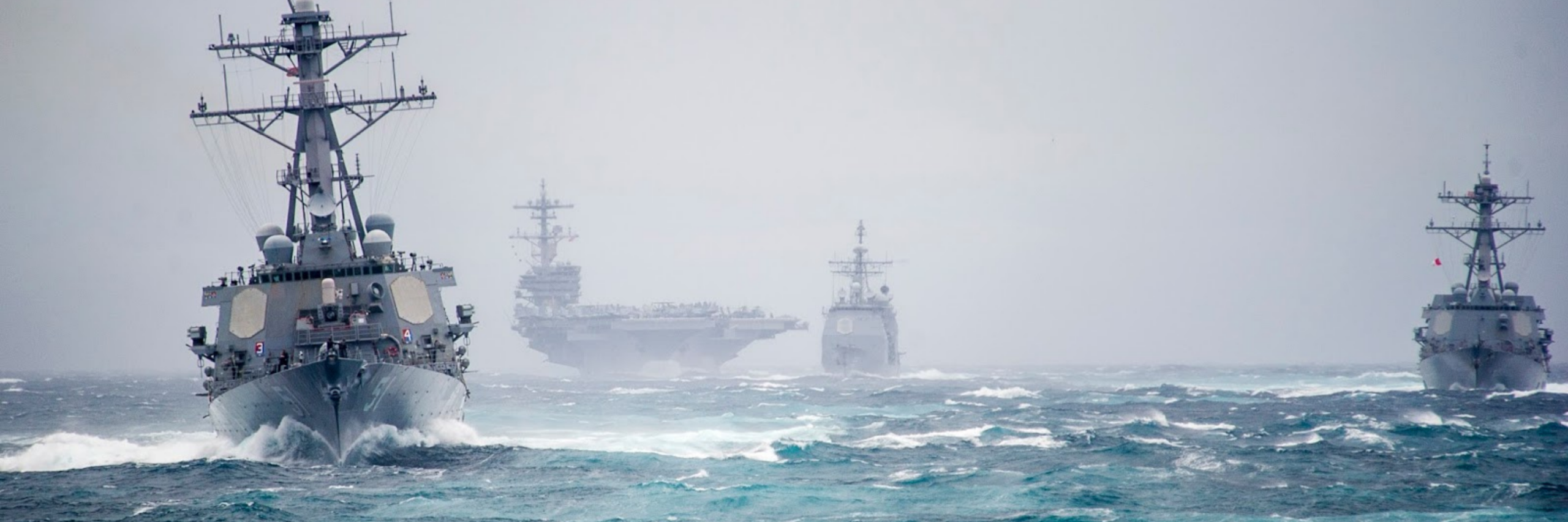
The National Security Policy Center (NSPC), in collaboration with the National Security Data and Policy Institute (NSDPI), has launched a multi-year research initiative focused on the future of sea power and U.S. naval policy. UVA Sea Power examines how emerging technologies are reshaping naval affairs across the spectrum of competition, crisis, and conflict. The initiative also helps train the next generation of maritime analysts and policymakers through internships, research positions, and direct participation in sponsored research projects. Our current work examines how disruptive technologies and shifts in the global economy are changing naval warfare and maritime security during the ongoing conflicts in the Black Sea, Red Sea, and Strait of Hormuz. Taken together, these cases represent a watershed moment in naval affairs. Sea power has reemerged as a central instrument of statecraft and is once again a salient concept to international security.
If you have questions, or would like to engage with the UVA Sea Power team, please contact Dr. John Robinson.
Research and Student Opportunities
Sea Power 2025
Sea Power 2025 was a year-long research project sponsored by the Office of Naval Research (ONR), chaired by Admiral Chas Richard and Dr. John Robinson. Sea Power 2025 established the analytical framework for UVA’s analysis of disruptive technologies and asymmetric tactics in the Black and Red Seas. The final report to ONR addressed the integration of unmanned systems and the implications for the future of naval warfare, strategy, and naval S&T. In addition, ADM Richard and Dr. Robinson recently published an article on the future of naval warfare in the U.S. Naval War College Review.
Read MoreChina’s Port Call Diplomacy
Naval diplomacy has existed since humans first went to sea in boats. In an era increasingly shaped by cyber capabilities, social media, and AI, the project asks whether traditional naval diplomacy still produces meaningful political and economic effects. Despite the increasingly digital nature of global politics and statecraft, a modern warship remains one of the most potent displays of national wealth, power, and prestige, particularly in a global economy dependent on maritime trade and secure sea lines of communication.
The UVA Sea Power team began the project by building the most comprehensive dataset of People’s Liberation Army Navy (PLAN) port visits available from 1985 to the present. During summer 2026, researcher Morgan Glass and the NSPC’s 2026 intern cohort analyzed linkages between Chinese naval diplomacy and a range of political and economic outcomes including bilateral trade agreements, Belt and Road Initiative investments, and international recognition of the One China policy.
Preliminary analysis suggests that Beijing’s use of naval diplomacy achieved broadly favorable outcomes early on; however, China’s expanding naval presence increasingly elicited balancing behavior as Beijing’s strategic objective diverged from those of the U.S. and the West.
Commerce Warfare in the Age of Trade Transparency
Since World War II, major maritime powers have ensured relative stability for seaborne trade and the flow of commerce in a globalized world. Recent Russian and Ukrainian operations affecting commercial shipping in the Black Sea, Houthi attacks in the Red Sea, and Iranian actions around the Strait of Hormuz demonstrate the growing ability of both state and non-state actors to exploit vulnerabilities in maritime trade and global supply chains. Going forward, emerging technologies and the data they produce will necessitate new naval technologies and operational concepts to employ them. The UVA Sea Power team’s current work includes daily analysis of vessel transit data and attacks affecting commercial shipping across these three maritime theaters. Led by Morgan Glass, the research is designed to map the evolution of modern commerce warfare and assess its implications for future naval force structure, operational concepts, and tactics. Commercial shipping is more observable than at any point in history, yet greater transparency has not eliminated vulnerability; instead, it has created new opportunities to identify, track, and disrupt maritime commerce.
Strategic Deterrence and the Ethics of Science and Technology Development
In 2024, the NSPC established an interdisciplinary faculty and student research team from UVA’s schools of law, policy, and engineering to examine historical debates surrounding ethical technology development and assess existing laws and policies affecting the government S&T community. The team delivered its findings to the Office of Naval Research (ONR) to help inform future approaches to ethical S&T development and identify implications for U.S. policy, law, and professional standards. This work complements UVA Sea Power’s broader examination of how rapidly evolving technologies should be developed and incorporated into future naval capabilities.
Innovating for Defense (I4D)
Since 2018, undergraduate and graduate I4D courses have provided UVA students with the rare opportunity to work directly with the U.S. Government to address real-world national security challenges. Through research, stakeholder interviews, and engagements with outside experts, student teams develop policy recommendations for their project sponsors’ organizations. Recent naval-centric projects include:
- Assessing the Impact of AI Integration on Naval Operations
- Force Design and the U.S. Navy’s Hybrid Fleet
- The Future of Autonomous Technology in the Maritime Domain
- Gray Zone Tactics and the Protection of Global Undersea Infrastructure
Together, these efforts position UVA Sea Power as an interdisciplinary research and education initiative focused on understanding how technology, economics, strategy, and policy are reshaping maritime competition. By combining faculty expertise, sponsored research, original data collection, and student engagement, the initiative seeks to produce policy-relevant analysis while developing the next generation of maritime scholars and national security professionals.
Receive NSPC News & Updates
Click below to join our email list so you can receive news, updates, event notices, and more from UVA’s National Security Initiatives.