Ambassador Art Brown, UVA Alumnus, Speaks to Students about Foreign Policy
October 29, 2026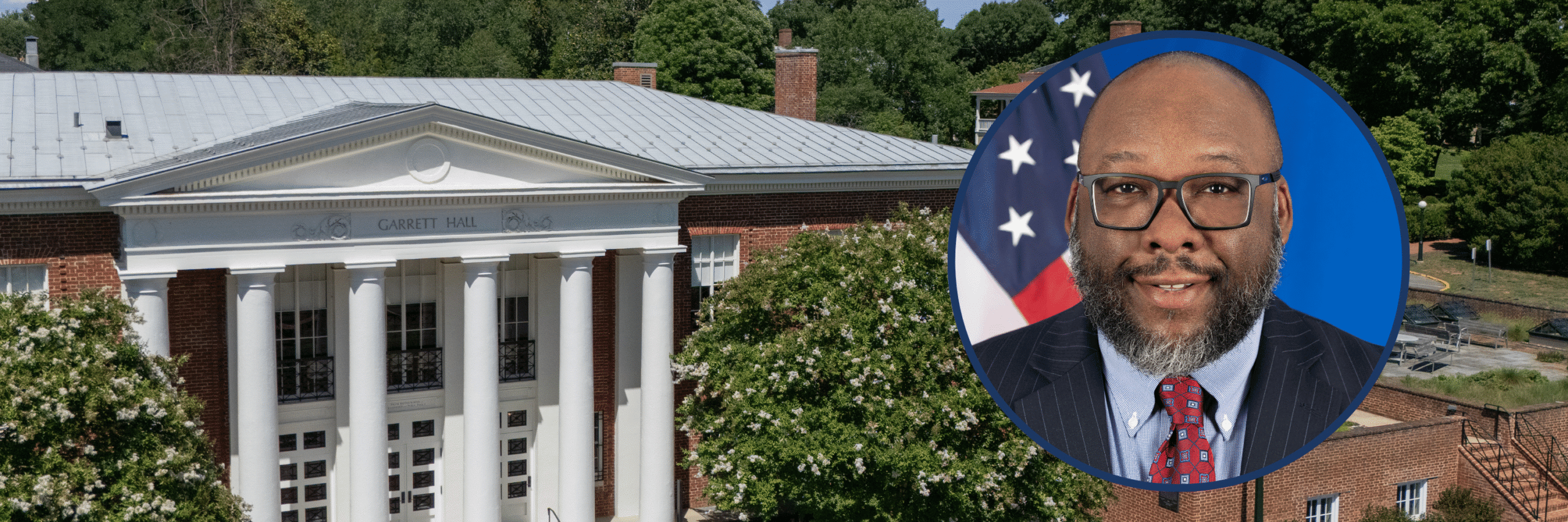
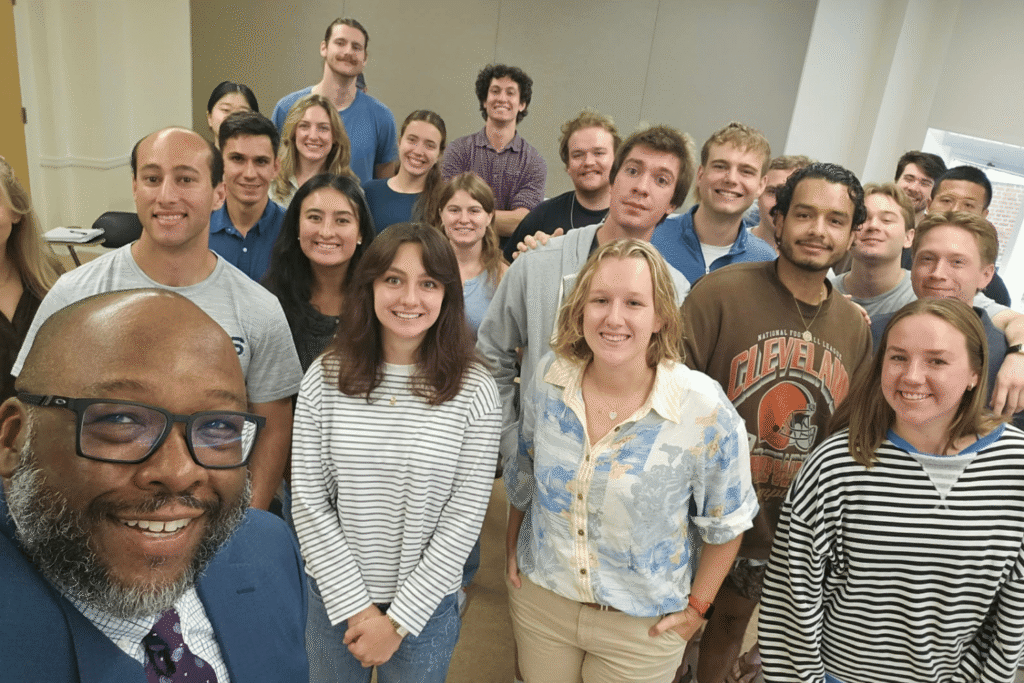
Ambassador Art Brown, UVA class of 1989 and former Ambassador to Ecuador, spoke with students in Dr. John Robinson’s Elements of Statecraft class earlier this October to discuss the importance of diplomacy. Amb. Brown (Ret.), born in the University of Virginia Hospital, left the Piedmont region after graduating UVA and started his career in international affairs by joining the Peace Corps. His time serving in Benin sparked an interest in foreign policy that led him to join USAID, a first step on his path to eventually becoming an ambassador.
Amb. Brown dedicated much of his visit to providing career advice to students hoping to embark on a similar professional journey. While the effective shutdown of USAID and cuts to foreign aid have left less public sector opportunities in his field than in years past, he encouraged students to look into NGOs as a means of getting involved. For those who still hope to work within the government, he recommended watching the appropriations process and following where the money that formerly went to USAID is now being allocated. Along with providing practical job-hunting advice, Amb. Brown also emphasized the importance of building emotional intelligence, communicating your wants and needs in a career, and learning to work with people, even when it is difficult.
 Reflecting on his foreign policy career, Amb, Brown highlighted the importance of empathy, particularly when it comes to understanding other cultures and ways of living. Coming from USAID, he had much to say about the current state of US foreign assistance and humanitarian aid programs, explaining how the dismantling of his organization caused the elimination of thousands of programs that were having lifelong impacts globally. However, Amb. Brown emphasized that while going through the dissolution of USAID, he had to compartmentalize his personal feelings to be a good leader to a team struggling with uncertainty. His comments offered a rare glimpse into the perspective of civil servants who, directly impacted by government policy, must balance its emotional toll with the day-to-day duties of their jobs.
Amb. Brown also gave Dr. Robinson’s class an overview of the daily challenges of being an ambassador, with duties ranging from communicating with Washington to meeting children in local schools. Students were surprised to learn the true scope of an ambassador’s role, which involves coordinating all US agencies in the country. Amb. Brown used his experience in Ecuador to illustrate the importance of identifying the root cause of problems rather than just trying to solve the symptoms. While Ecuador was plagued with transnational crime, his office found that truancy was a major upstream factor contributing to the problem; educational reforms aimed at keeping kids in school became some of the most effective measures for reducing the crime rate.
Altogether, Amb. Brown’s visit was a rare and valuable opportunity for aspiring public servants to learn from a senior foreign policy professional. The ambassador’s unique experience showed students the variety of opportunities that exist within the field of foreign affairs, and how different professional backgrounds come together to make successful foreign policy that furthers national interests and global welfare. “I had an inspiring time connecting with Batten students for a high-impact session on national security and diplomacy” said Amb. Brown following the session. “It was a privilege to help students connect their core curriculum themes to the practical complexities of diplomatic execution, and I was thoroughly impressed by their thoughtful questions and sharp perspective.”
Receive NSPC News & Updates
Click below to join our email list so you can receive news, updates, event notices, and more from UVA’s National Security Initiatives.